
Baseball Hits 26
Ares Interactive, Inc.Sports
4.41.51K Reviews
- Version
- 1.4.0
- Installs
- 500.00K
- Age Rating
- Everyone
Screenshots
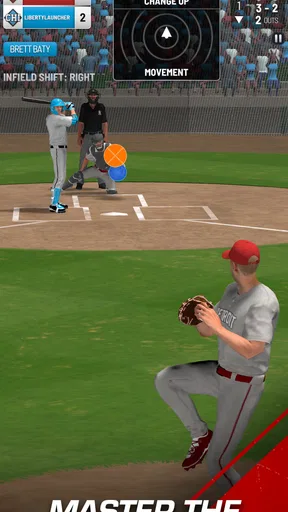
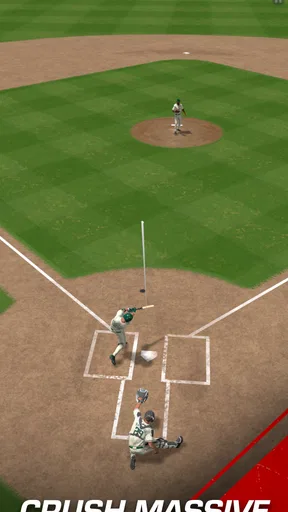
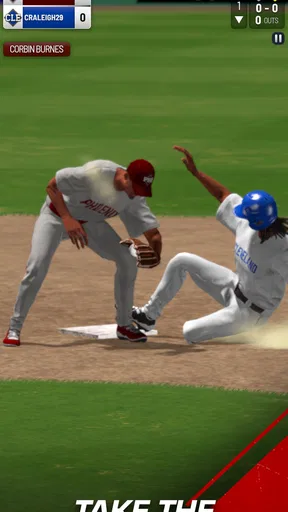
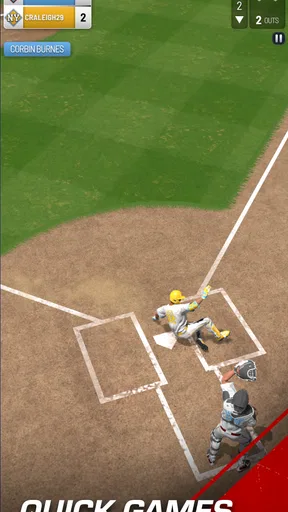
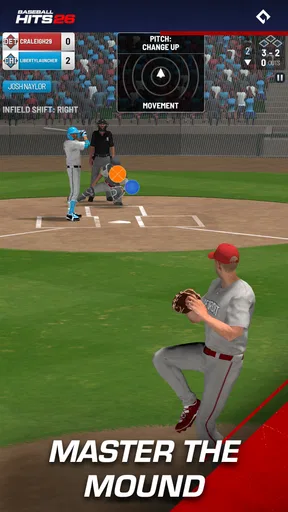
Our Review of Baseball Hits 26
 Analysis by Appyee
I spent time with Baseball Hits 26 as a casual sports game, and my first impression was that it aims for a very specific kind of baseball session: quick enough for a spare moment, but structured enough to make another attempt feel worthwhile. It is an officially licensed game featuring MLB Players, Inc., developed by Ares Interactive, Inc., and it is available free of charge. That combination gives it immediate appeal to baseball fans who want something more focused than a general sports collection.
The important question, though, is not whether the license sounds attractive. It is whether the game gives you a good reason to return after the novelty of seeing familiar baseball names wears off. In my experience, its strongest quality is the way it turns a simple baseball premise into a series of small goals. The weaker side is that players who want a deep simulation, a complete season structure, or a highly tactical management experience may find the format too light.
How the first sessions establish a reason to keep playing
The opening hours work best when I treat each session as a short challenge rather than a full replacement for a console baseball game. The early goals are easy to understand: get comfortable with the timing, learn how the game expects me to approach each play, and start building enough momentum to make the next attempt feel meaningful. That clarity matters on a phone, where I may only have a few minutes and do not want to study a complicated control system before seeing any payoff.
I also found that the MLB connection changes the feel of those first sessions. Familiar player identities make the experience more recognizable than an anonymous arcade baseball game, even when the actual play remains streamlined. The license is not a substitute for depth, but it gives the early progress a clearer sports context. I am not simply clearing abstract stages; I am doing it inside a baseball presentation that has a stronger connection to the real sport.
One practical tip is to resist rushing through the first attempts just to reach later content. I got more value from using the opening sessions to identify the game’s rhythm. On a touchscreen, small differences in timing can make a simple action feel either controlled or frustrating. Once I stopped treating every miss as a failure and started treating it as feedback about timing, the early loop became more enjoyable.
This is also where the game’s audience becomes clear. Someone looking for a quick baseball hit before work, during a commute, or while waiting for an appointment can understand the appeal immediately. A player who expects a detailed batting order, extensive roster management, or a long strategic campaign should adjust expectations from the beginning. The early goals are approachable, not exhaustive.
Progress feels clearest when I focus on visible improvement
Progress in a mobile sports game needs to be easy to read. I want to know why I am playing another round, and I want the improvement to feel connected to what I just did. Baseball Hits 26 benefits when I focus on the small signals: a cleaner attempt, a better response to the challenge in front of me, or a stronger sense that I understand the game’s timing.
That kind of progress is less dramatic than unlocking an entirely new sport or mastering a large strategic system, but it suits the compact format. The game’s appeal comes from gradually becoming more consistent. I can see the difference between playing without a plan and entering a session with a specific objective, such as concentrating on timing rather than simply chasing a high result.
A useful personal workflow is to give each short session one purpose. In one session, I might concentrate on avoiding rushed inputs. In another, I might focus on surviving a difficult sequence instead of trying to force a perfect outcome. This makes the game feel less repetitive because I am measuring improvement in a more useful way than simply asking whether I won.
That approach also reveals a trade-off. Players who need large, frequent unlocks to stay interested may find the progress signals modest. The experience is more satisfying for people who enjoy incremental mastery and recognizable baseball presentation. It is less convincing for anyone who expects every few minutes to produce a major reward or a dramatic change in the way the game plays.
The game is free, which makes trying that loop easy, but the presence of in-app purchases is worth keeping in mind. Items range from $0.49 to $99.99 each. I would recommend deciding in advance whether I am comfortable spending anything, rather than allowing a moment of frustration to make that decision for me. In a progression-focused game, impatience can make optional purchases feel more tempting than they did at the start.
The challenge curve rewards patience more than frantic play
The challenge works best when I accept that improvement comes from adapting, not from repeating the same action more aggressively. Early familiarity can create a false sense of security: once the basic rhythm feels comfortable, a tougher sequence can expose weak timing or poor decision-making. That is a healthy kind of difficulty for a short sports game because it gives me something specific to correct.
My main advice is to separate a bad result from a bad session. If I make one poor attempt, immediately trying to compensate with faster inputs usually makes the next attempt worse. Taking a moment to reset my attention is more effective. This sounds simple, but it is one of the clearest differences between a game I can play casually and a game that leaves me irritated after a few minutes.
The difficulty is also more enjoyable when I play in short bursts. Longer sessions can turn small mistakes into a pattern, especially on a phone where hand position, attention, and screen comfort can change over time. The game’s compact sports identity supports a stop-and-return rhythm. I can play, notice what caused a mistake, and come back later with a more focused goal instead of grinding until the experience feels flat.
That pacing will not satisfy everyone. A player seeking a demanding baseball simulation may consider the challenge too narrow because the core interaction does not appear designed to reproduce every part of a real game. On the other hand, a player who wants accessible sports action may appreciate that the learning curve does not require a large time commitment before the game becomes readable.
My experience also suggests that the best way to judge the challenge is not by asking whether it is realistic. The better question is whether it gives me a reason to improve within its own rules. For that purpose, the game is more successful. It creates a compact test of consistency rather than trying to be a complete baseball encyclopedia on a touchscreen.
Where retention helps and where it can become pressure
The game’s retention appeal comes from the familiar mobile pattern of returning for another attempt, another improvement, or another piece of progress. That can be satisfying when I am choosing to play because I want to test myself. It becomes less comfortable when the desire to continue is driven mainly by frustration or by the feeling that spending would remove an obstacle.
I prefer to approach the progression as a series of optional personal targets. For example, I might play until I achieve a cleaner result than in the previous session, then stop while the experience still feels positive. This prevents the game from turning a short break into an unplanned extended session. It also helps me decide whether the underlying play is enjoyable on its own, which is the most important test for any free sports game.
The purchase range makes that self-control especially relevant. A low-cost item may feel harmless, while the highest-priced option represents a much more serious commitment. I would not recommend spending simply because I want to move past a difficult stretch faster. If the basic loop is not enjoyable without extra help, purchasing more content or assistance is unlikely to solve the real problem.
Parents may also appreciate that the content rating is Everyone, but an age-appropriate rating does not remove the need for sensible purchase controls on a shared device. I would set those expectations before handing the phone to a younger player. The game can be suitable for a broad audience while still encouraging conversations about optional spending and screen time.
Another retention issue is variety. The MLB license gives the game a stronger identity than a generic baseball title, but a license alone cannot guarantee that every player will remain interested. If I want constant mechanical change, a large career mode, or a wide range of baseball situations, I may eventually prefer a fuller sports game. Baseball Hits 26 is better understood as a focused mobile experience whose replay value depends on whether I enjoy refining short attempts.
How it compares with other ways to play baseball on mobile
Compared with a full baseball simulation, this game is easier to pick up and less demanding of my time. I do not need to commit to a long match or learn a large set of controls before getting a useful session. That makes it a better choice for quick play, especially when I want the feeling of baseball without managing every inning, roster decision, or tactical adjustment.
Compared with a purely casual arcade game, the official MLB Players, Inc. connection gives it more sports personality. The recognizable baseball framing makes the experience feel less disposable, even though the gameplay remains streamlined. For me, that is the middle ground: more identity than a generic reflex game, but less depth than a serious simulation.
Management-focused baseball games are a better alternative for players who enjoy building a team, analyzing lineups, and making decisions away from the action. They offer a different kind of satisfaction. I would choose Baseball Hits 26 instead when I want direct interaction and a faster route into a baseball session, not when I want to act as a general manager.
There is also a difference between this game and watching real baseball. The licensed presentation may make it more appealing to fans, but it does not replace the unpredictability, length, or strategic texture of a real match. I see it as a companion for short breaks rather than a substitute for following a team through a season.
Who will enjoy it, and who should skip it
I would recommend it to baseball fans who want an accessible mobile game with an official MLB connection, quick sessions, and a progression loop based on repeated improvement. It is particularly suitable for someone who plays in small gaps during the day and prefers learning a focused interaction over managing a complicated sports system.
It is also a reasonable starting point for a younger or less experienced player who wants baseball action without the intimidating controls found in deeper simulations. The Everyone rating supports that broad accessibility, while the free entry point makes it easy to test the basic experience before making any commitment.
I would skip it if my main goal were a detailed recreation of baseball strategy. I would also be cautious if I dislike repeated attempts, gradual improvement, or optional purchase prompts in free-to-play games. Players who want a large amount of content immediately may feel that the focused design does not offer enough variety for long sessions.
The current version is 1.2.1, and the game supports devices running at least iOS or Android version 9. Before installing, I would still check the operating system on an older phone, especially if the device is shared or has limited storage. That small check avoids the common disappointment of finding a game that looks suitable but cannot run on the intended device.
My progression verdict after playing
Baseball Hits 26 succeeds when its goals remain small, clear, and connected to the pleasure of improving at a baseball-focused challenge. I enjoyed it most when I played with a specific intention, accepted that difficult attempts were part of the learning process, and stopped before repetition became pressure. The game does not need to imitate every part of baseball to be worthwhile; it needs to make its own short sessions feel satisfying.
Its strongest retention tool is not the promise of endless complexity. It is the simple urge to try again with better timing and a clearer plan. That will be enough for some players, especially fans who want a recognizable MLB setting in a compact format. It will not be enough for players who measure value by the breadth of a career mode or the depth of simulation systems.
With an average rating of 4.5 from around 11 thousand ratings and more than 500 thousand installs, it has already attracted a substantial audience for a free sports game. Those figures do not change my own judgment, but they fit the experience I had: approachable, easy to sample, and most enjoyable when treated as a focused baseball break rather than a complete console-style season.
My final recommendation is straightforward: try it if you want quick MLB-themed baseball play with gradual goals, and keep your spending limits clear before you begin. I would recommend it to a friend who enjoys short mobile challenges and familiar sports presentation. I would point that same friend elsewhere if they wanted deep team management, extensive tactical control, or a game that constantly introduces new systems. For the right player, its restrained scope is a strength; for everyone else, it is the reason to look for a fuller alternative.
Privacy and Permissions
See what permissions an app requests and how it handles your data.
- Location
- approximate location (network-based)
- Photos/Media/Files
- read the contents of your USB storage
- Storage
- read the contents of your USB storage
- Wi-Fi connection information
- view Wi-Fi connections
- Other
- view network connections, pair with Bluetooth devices, access Bluetooth settings, connect and disconnect from Wi-Fi, full network access, run at startup, control vibration, prevent device from sleeping, Google Play license check, read Google service configuration
Verdict
Strengths of Baseball Hits 26
- Quick matches are ideal for short gaming sessions.
- Simple controls make batting and pitching easy to learn.
- Roster and team options add variety to repeated games.
- Bright graphics give the game a cheerful, accessible look.
- Offline play is useful when you have no internet connection.
Limitations of Baseball Hits 26
- Gameplay can become repetitive after extended sessions.
- Advanced baseball strategy options are fairly limited.
- Some features may require watching ads or making purchases.
- Player animations are not always smooth or realistic.
- The game may feel too casual for serious baseball fans.
Other Releases by Ares Interactive, Inc.
View All
The Walking Dead: Aftermath
Action4.7
Similar Picks in This Category
View All
8 Ball Pool
Miniclip.com4.8

Pooking - Billiards City
AIM TOP GAME TECHNOLOGY LIMITED - pool4.6

Carrom Pool: Disc Game
Miniclip.com4.4

EA SPORTS FC Soccer Mobile 26
ELECTRONIC ARTS4.6

World Soccer League
mobirix4.3

Soccer Cup 2026: Football Game
INLOGIC SPORTS - football tennis golf soccer4.3
Frequently Asked Questions
What is Baseball Hits 26, and what kind of gameplay does it offer?
Baseball Hits 26 is a baseball-themed mobile game focused on quick, accessible matches rather than a highly complex simulation. Players can take control of key moments such as batting, pitching, and fielding, depending on the available game modes. Its pick-up-and-play design makes it suitable for short sessions, while progression, challenges, and competitive elements may provide additional goals for players who want to improve their performance.
Can Baseball Hits 26 be played offline?
Offline availability may depend on the specific version and mode you are using. Some basic gameplay features can often work without a constant connection, but online competitions, advertisements, cloud synchronization, updates, and certain rewards may require internet access. Before downloading, users should check the store description and test the game after installation, especially if they plan to play while traveling or in areas with limited connectivity.
Is Baseball Hits 26 free to download and does it include in-app purchases?
Baseball Hits 26 may be available as a free download, but free installation does not necessarily mean that every feature is completely free. Mobile sports games commonly include optional purchases for virtual currency, upgrades, cosmetic items, extra attempts, or the removal of advertising. Review the payment details shown on Google Play or the App Store, and consider enabling parental controls if children will be using the device.
What devices are compatible with Baseball Hits 26?
Compatibility depends on the operating system, device model, available storage, and the minimum Android or iOS version required by the current release. Newer phones and tablets generally provide smoother animations and faster loading, while older hardware may experience reduced performance, crashes, or limited visual quality. Check the official store listing before downloading and make sure you have enough free space for the installation and future updates.
Is Baseball Hits 26 suitable for casual players and children?
Baseball Hits 26 can be a good choice for casual players who prefer short matches and straightforward controls instead of a demanding, full-season baseball simulator. However, suitability for children depends on the game’s age rating, advertisements, online features, chat options, and in-app purchase system. Parents should review the store rating and privacy information, then use device restrictions to control spending and limit potentially unsuitable interactions.
Play our best games!


